
How to Check Criminal History in Transylvania County
Begin a Transylvania County criminal record search with the public North Carolina eCourts Portal or a courthouse terminal. A portal result is a case summary, not the whole file and not an SBI rap sheet. Search by party name or case number, narrow the location to Transylvania County, then read the events and disposition. When an exact document or certified county search is needed, the Clerk of Superior Court is the record custodian. The clerk works at 7 East Main Street in Brevard, takes calls at 828-885-3000, and serves the public on weekdays from 8:30 a.m. to 5 p.m.
Names alone can match the wrong person. Use a full legal name, known spelling variants, approximate age, case number, and filing range when the official channel allows them. Do not assume a blank portal result ends the search. Older paper material, confidential entries, sealed files, juvenile matters, and unreturned process may not appear to an anonymous user. A careful Transylvania County check follows a short sequence:
- Search eCourts by exact case number or party name and filter the location to Transylvania County.
- Compare the case number, filing date, court division, and public party details before selecting a result.
- Read the case events, hearings, disposition, and financial entries that are actually displayed.
- Ask the clerk for the underlying public file when Portal omits a document or an older matter.
- Order the $25 certified single-county search on form AOC-CR-314 when certification is required.
The official courthouse location page shows the public record destination.
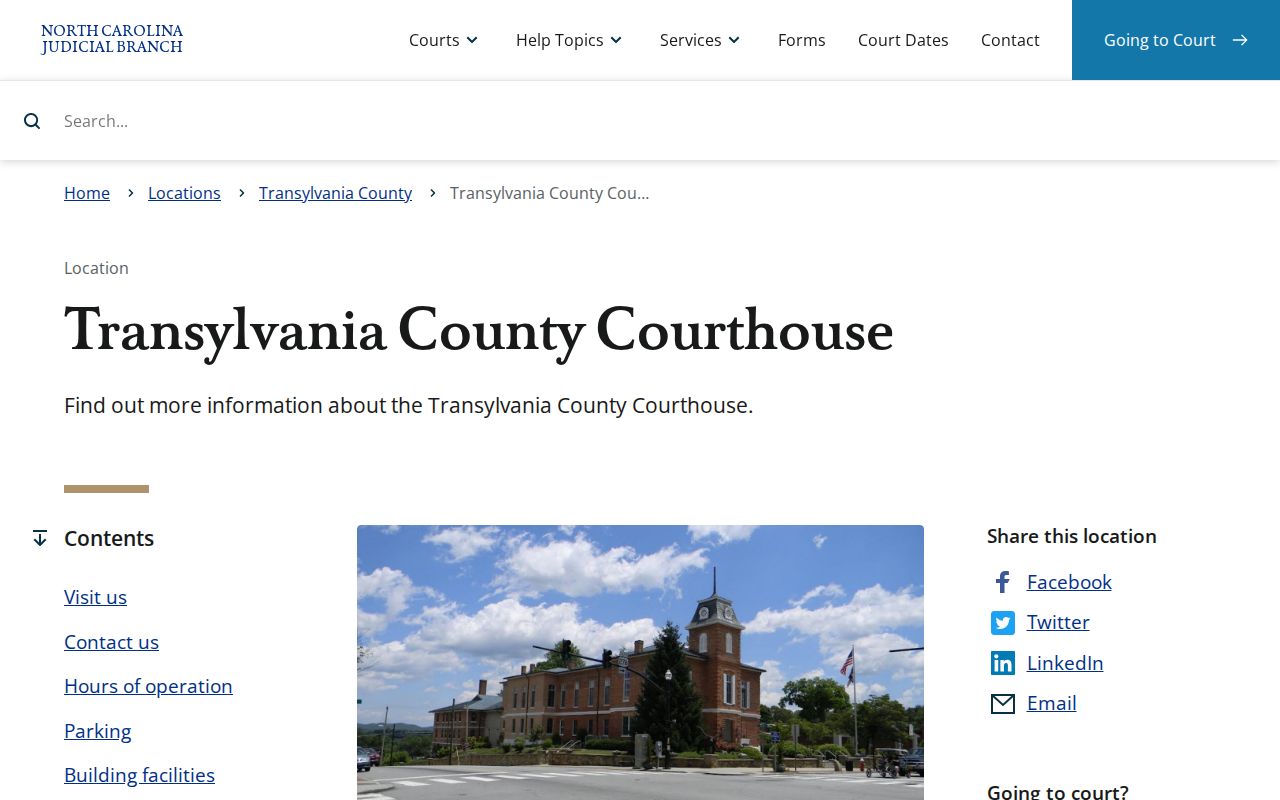
The courthouse channel matters because the clerk's file is the authoritative source for filed charges, public documents, and final disposition.
Transylvania County eCourts Record Shift
North Carolina completed its Enterprise Justice conversion in all 100 counties on October 13, 2025. That change placed Transylvania County case summaries in a statewide public interface. Smart Search defaults to case number or party name. A full Odyssey case number follows a year, case type, six-digit sequence, and three-digit county identifier. A partial number needs at least four characters followed by an asterisk. Name wildcards require at least three last-name characters and one first-name character before the asterisk.
Portal filters can narrow results by Transylvania County, criminal action, filing dates, date of birth, and available status choices. The result may show case information, assignments, parties other than victims, events, dispositions, hearings, and finances. Empty sections do not display. Anonymous access does not require an account, but restricted records remain outside public view. If the format is right and the record still does not appear, use the courthouse terminal and clerk paper-file route. The North Carolina eCourts overview documents the statewide system now used for Transylvania County criminal cases.
This statewide access point improves reach, yet it does not turn a case summary into a certified search or fingerprint-matched history.
Note: Portal is a near-real-time court index, while a certified Transylvania County search still comes from the Clerk of Superior Court.
Official North Carolina Background Checks
The North Carolina State Bureau of Investigation does not offer the public an unrestricted name search of its computerized criminal-history repository. A person reviewing their own North Carolina record uses the fingerprint-based Right to Review. The applicant obtains a complete ten-print card from local law enforcement, completes the current SBI form, and mails both with a $14 certified check or money order. Personal delivery, cash, credit cards, and personal checks are not accepted for this product.
The result covers North Carolina arrests and associated dispositions, if available, for which SBI received fingerprint-supported information. It does not include a national search or every courthouse file. Poor prints or an incomplete card are returned. A person who finds an error first obtains the result, then follows SBI's written-exception process. Other official options answer different questions: the $25 clerk search certifies one county's court index, courthouse terminals search noncertified court data without charge, and eCourts supplies a public summary.
| Official channel | Cost | Main limit |
|---|---|---|
| Transylvania County clerk search | $25 | Certified, one-county court index |
| Courthouse terminal | Free | Noncertified county or statewide court data |
| eCourts Portal | Free | Public case summary, not a formal check |
| SBI Right to Review | $14 | Your fingerprint-supported North Carolina record |
The SBI personal-review page supplies the official Transylvania County self-review route.
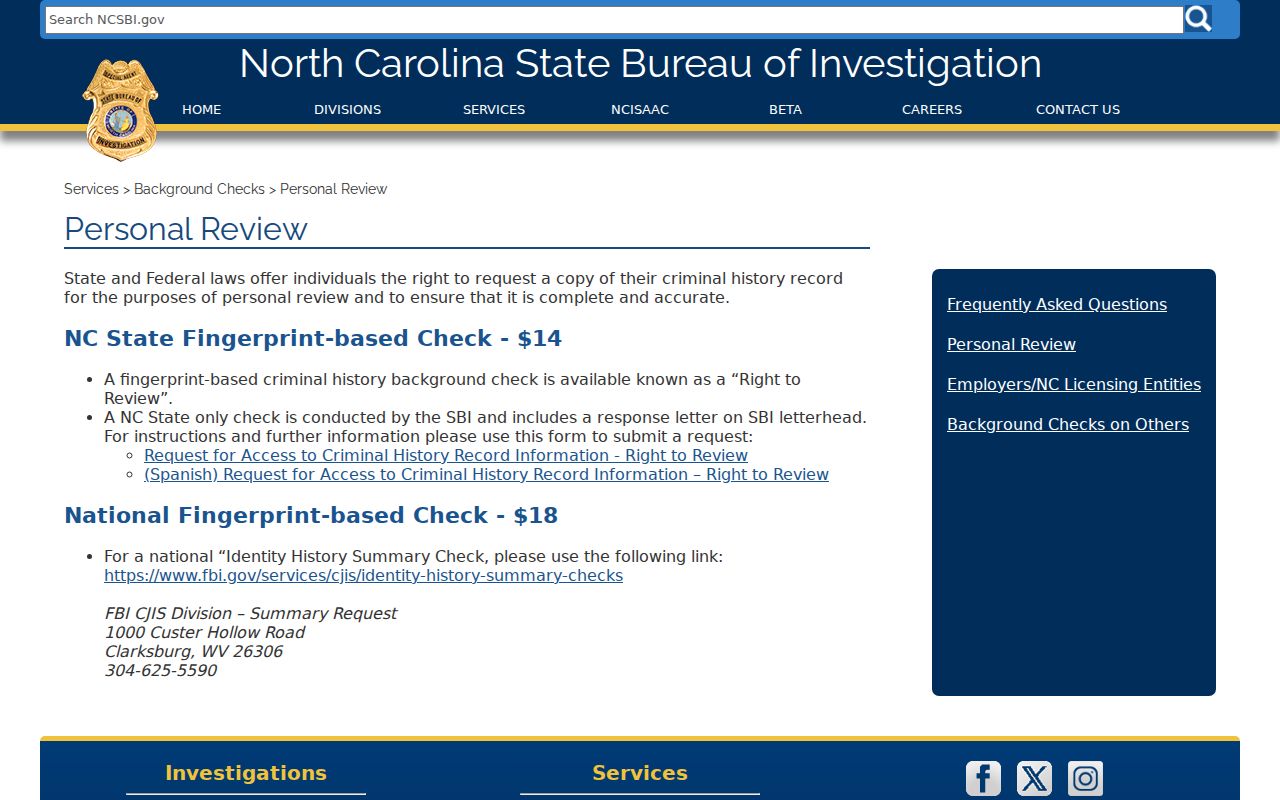
The fingerprint route is useful for checking your own repository record because it links the search to identity rather than a name alone.
Four Transylvania County Arrest Records
One arrest can produce four related Transylvania County records. The responding sheriff, Brevard police officer, state trooper, or other agency creates an incident and arrest file. If the person enters the county detention center, jail staff create the booking and custody entry. A magistrate handles the first judicial process, and the clerk maintains the District or Superior Court case. Fingerprints for a qualifying arrest may also support an SBI arrest cycle and later disposition.
These sources can disagree without one being false. The booking charge reflects what reached the jail. A prosecutor may later amend, replace, or decline that charge. The court file records what was filed and how it ended. SBI may lack a disposition because of reporting delay, unmatched identifiers, or missing fingerprint support. Compare the incident report, booking data, court case, and your own SBI review before drawing a conclusion from a Transylvania County criminal record. The official Transylvania County Sheriff site connects readers to jail, recent-arrest, crime-map, and records contacts.
The sheriff channel supplies the local agency and custody layers, while the clerk and SBI supply different parts of the record trail. Record flow: Arresting agency › county booking › District or Superior Court › SBI disposition matching.
Types of Criminal Records
Transylvania County criminal history is not stored as one public file. Each custodian keeps the part created by its work. The sheriff or Brevard Police Department retains the originating report. The detention center holds current booking and custody data. The clerk preserves public criminal process, court events, and judgments. NCDAC publishes state prison and some supervision information. The SBI holds fingerprint-supported state history and runs the public sex offender registry.
- Incident and arrest records identify the response, alleged conduct, agency, and enforcement action.
- Booking and custody records track intake, received charges, bond, custody, and release.
- Court case files preserve filed charges, events, pleas, disposition, and sentence.
- Warrant records include public returned process, while unserved or sealed process may remain hidden.
- Corrections and registry records cover state custody, supervision status, and public registration duties.
The North Carolina registry search illustrates a safety-focused Transylvania County record that is separate from a full criminal history.
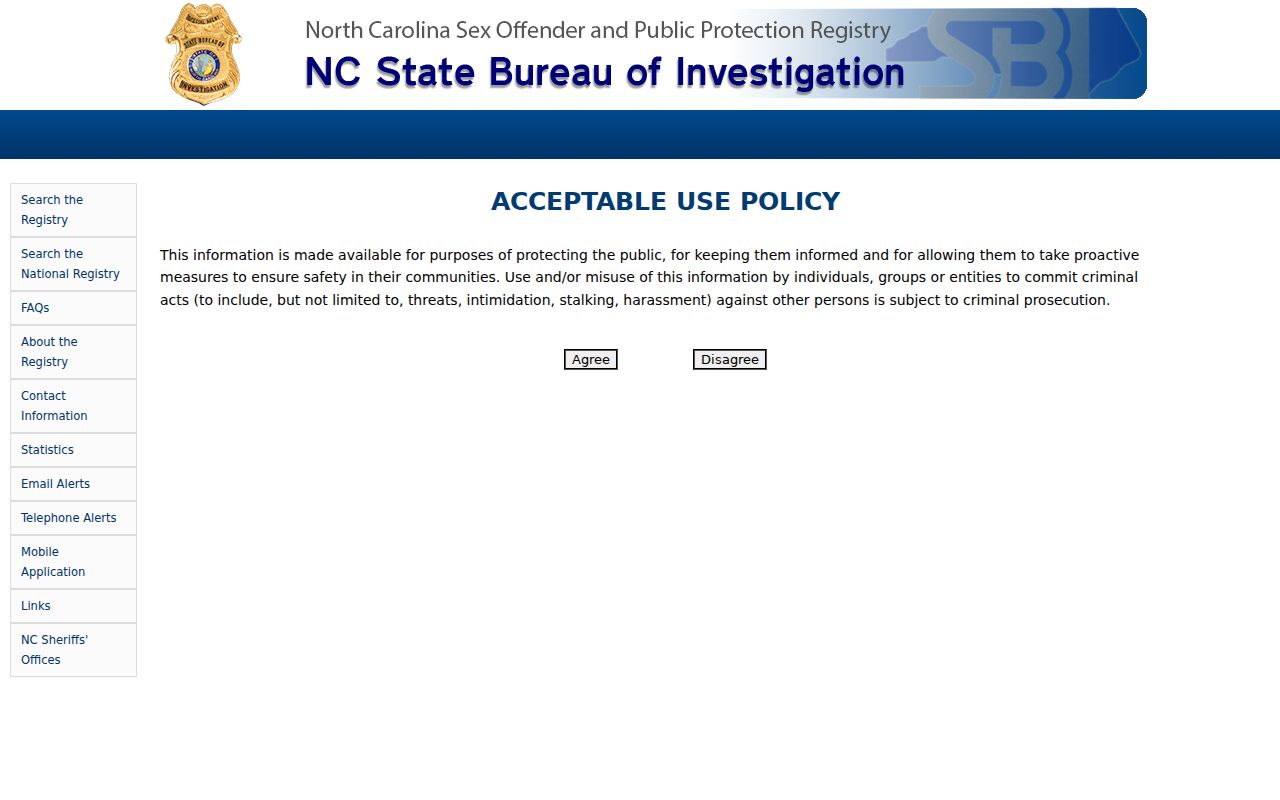
Registry profiles have a narrow public-safety purpose and should not be treated as a list of every local criminal case.
Transylvania County Warrant Record Chain
Transylvania County has no verified public name database containing every active warrant. The sheriff's Most Wanted feature is a curated channel, not a complete warrant list, and its feed was empty during research. North Carolina eWarrants is a justice-agency workflow rather than a public statewide search. An empty feed or absent portal case is therefore not proof that no process exists.
Start with the clerk at 828-885-3000 for case-linked warrants, orders for arrest, missed settings, and returned process. Contact the sheriff at 828-884-3168 or 828-884-3169 for service and execution information, or use the detention and nonemergency line at 828-884-3147. Magistrates can explain local criminal-process and bond procedure at 828-884-3154, but that number is not advertised as a warrant-search hotline. CrimeStoppers takes tips, not personal clearance requests.
If a warrant may be active: verify the case number and issuing court before appearing in person. Records staff cannot cancel judicial process, and surrender may result in arrest and a new release decision.
Note: Returned warrants may become public court records, but sealed, juvenile, unreturned, and investigative process can remain unavailable.
What a Transylvania County Criminal Record Shows
The fields depend on the source. An eCourts summary can show public case information, party data, events, hearings, dispositions, and finances. A booking record focuses on the intake and custody period. An SBI record links identity and fingerprints to reported North Carolina arrest cycles and associated outcomes when available. No source should be assumed to display every field in every Transylvania County matter.
| Name & identifiers | Public party name and aliases may appear; fingerprints provide the strongest identity match in the SBI record. |
|---|---|
| Arrest & booking data | Agency, date, received charge, bond, custody, and release fields may be created by the arresting agency or jail. |
| Charges & statutes | Allegations can change between arrest, prosecutor review, amendment, and judgment. |
| Disposition | Dismissal, not guilty, guilty plea, or judgment records how the filed count ended. |
| Sentence | The judgment may state confinement, probation, costs, or other ordered terms. |
| Custody or supervision | The sheriff and NCDAC answer different questions about county detention, state prison, and supervision. |
- Charge
- An accusation filed or received, not a finding of guilt.
- Disposition
- The result of a charge, such as dismissal, acquittal, or conviction.
- CR number
- The North Carolina criminal court case identifier, distinct from an agency report number.
- OCA number
- An originating agency number used by police for the incident file.
Read the disposition and judgment before treating any charge label as the final result. A Transylvania County arrest entry cannot establish guilt by itself.
Transylvania County Courthouse Record History
The historic courthouse remains the center of Transylvania County court records. The brick building was completed in 1881. A jail addition followed in 1921, and that former jail space now supports District Attorney and Public Defender work. The elected clerk and court documents remain in the original courthouse. That history explains why a modern online search may still lead to a nineteenth-century records building for the actual file.
Official studies have described tight record storage, access limits, security concerns, and too many court users sharing constrained paths. The county bought land at Public Safety Way in 2005 for the jail and public-safety complex with possible court use in mind. New courthouse planning continued in 2024 and 2025, but the clerk counter at 7 East Main Street remains the published public destination. The county's courthouse planning record places current access in that longer facilities story.
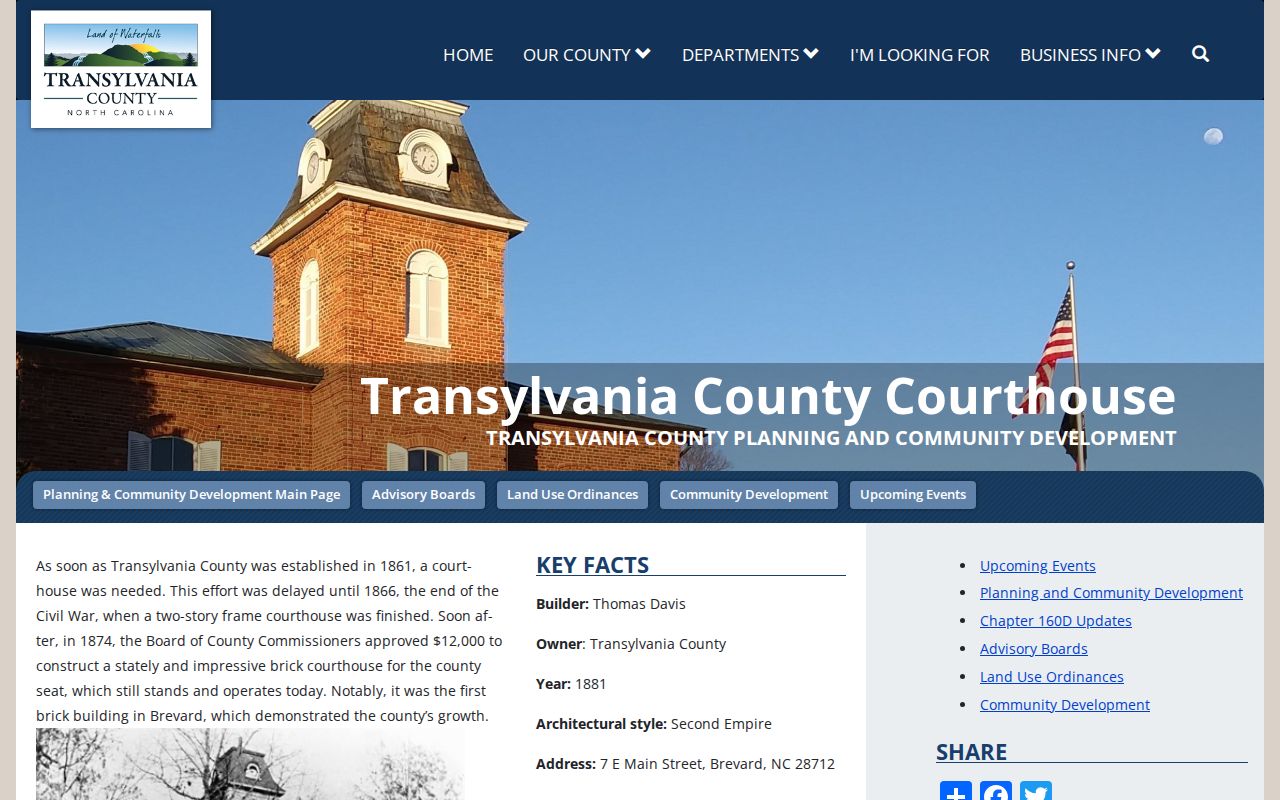
The planning history is relevant to anyone seeking paper records because it documents why space, storage, and public movement remain active county concerns. The official judicial contact directory separates the clerk, judges, prosecutor, magistrates, and court reporters.
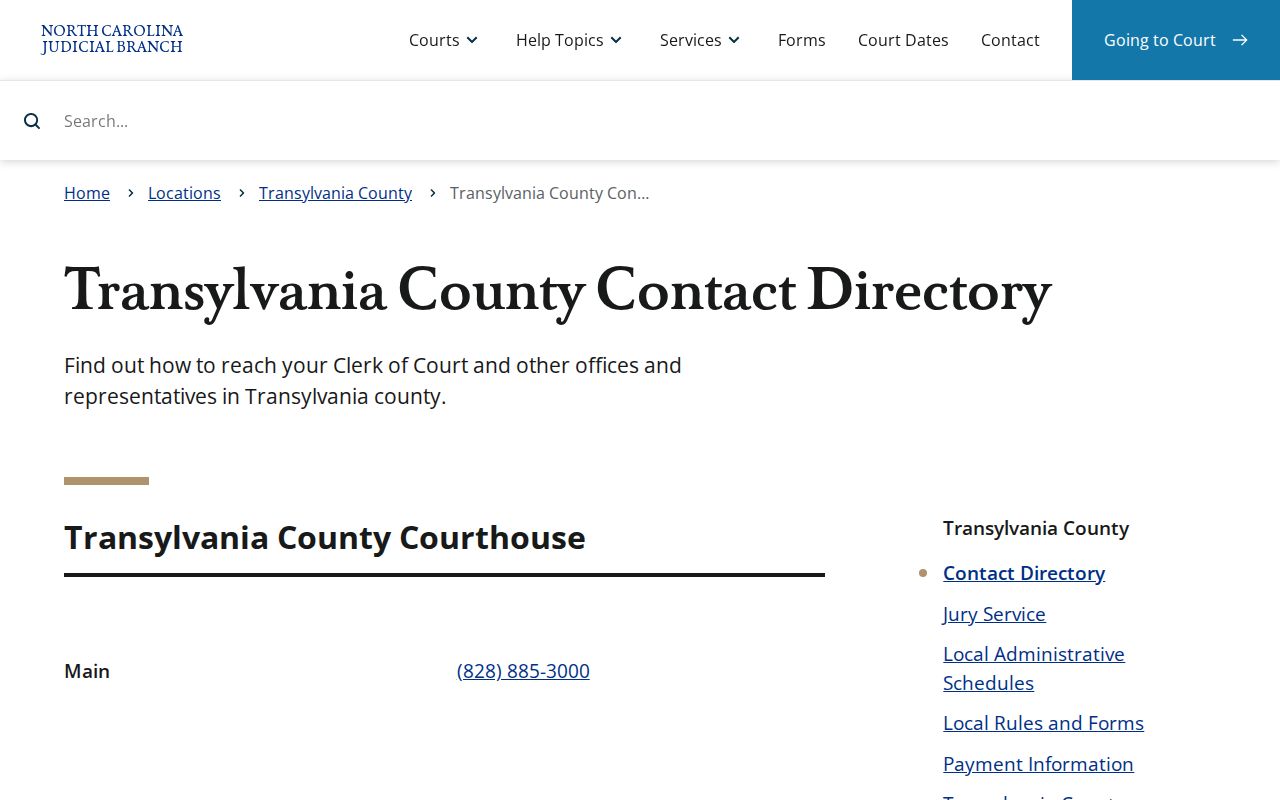
That division of duties helps route a record request to the custodian instead of to an office that merely participates in the case.
Public Access Laws
North Carolina Public Records Law, Chapter 132, begins with broad public access but does not make every criminal-justice record open. The clerk controls filed court material. The sheriff or police department controls its agency file. Basic arrest and incident facts receive different treatment from investigative intelligence. Video follows a special court-centered process. Juvenile, sealed, expunged, victim-identifying, and other protected material can remain outside ordinary Transylvania County searches.
Key North Carolina laws:
- G.S. 132-1 and 132-6 define public records and require reasonable inspection and prompt copies subject to lawful fees.
- G.S. 132-1.4 opens specified basic law-enforcement information but treats investigative records and criminal process separately.
- G.S. 7A-109 provides public inspection and copying of court records subject to confidential and sealed limits.
- G.S. 15A-153 controls how public entries are cleared after an expunction while preserving listed exceptions.
The official law-enforcement-record statute page provides the source text used for Transylvania County incident and arrest access.
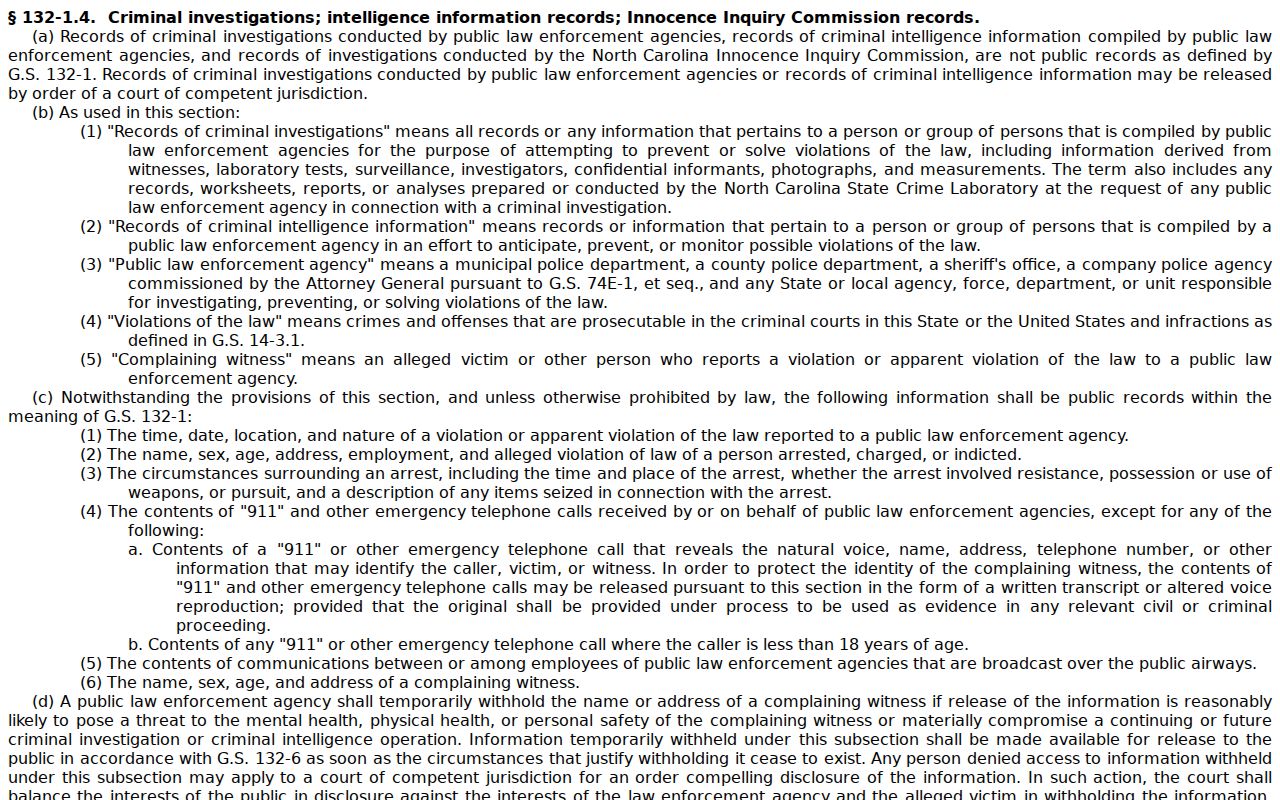
The statute confirms why asking for basic public facts differs from requesting an entire investigative file.
Transylvania County Jail Record Context
The Transylvania County Detention Center at 153 Public Safety Way is the county's single identified adult jail. The sheriff publishes separate Inmate Search and Recent Arrests feeds. Both returned empty arrays during the research inspection. Each was configured for search, sorting, descending date order, and a ten-item display limit, but the empty result prevented verification of public profile fields. Call the detention line at 828-884-3147 when the online feed is blank.
Official county reporting adds context without turning custody data into guilt. A 2026 report described more than 1,100 booking and release movements during 2025 and an average daily population of 59. An earlier official report discussed local, state misdemeanant, and federal detainees. The Sheriff and CARE Coalition also provide jail-based case management, behavioral-health support, treatment links, and reentry work. One report counted 344 people receiving support and said roughly four detainees leave the facility each day.
The county Sheriff department page identifies the local criminal-record and jail agency.
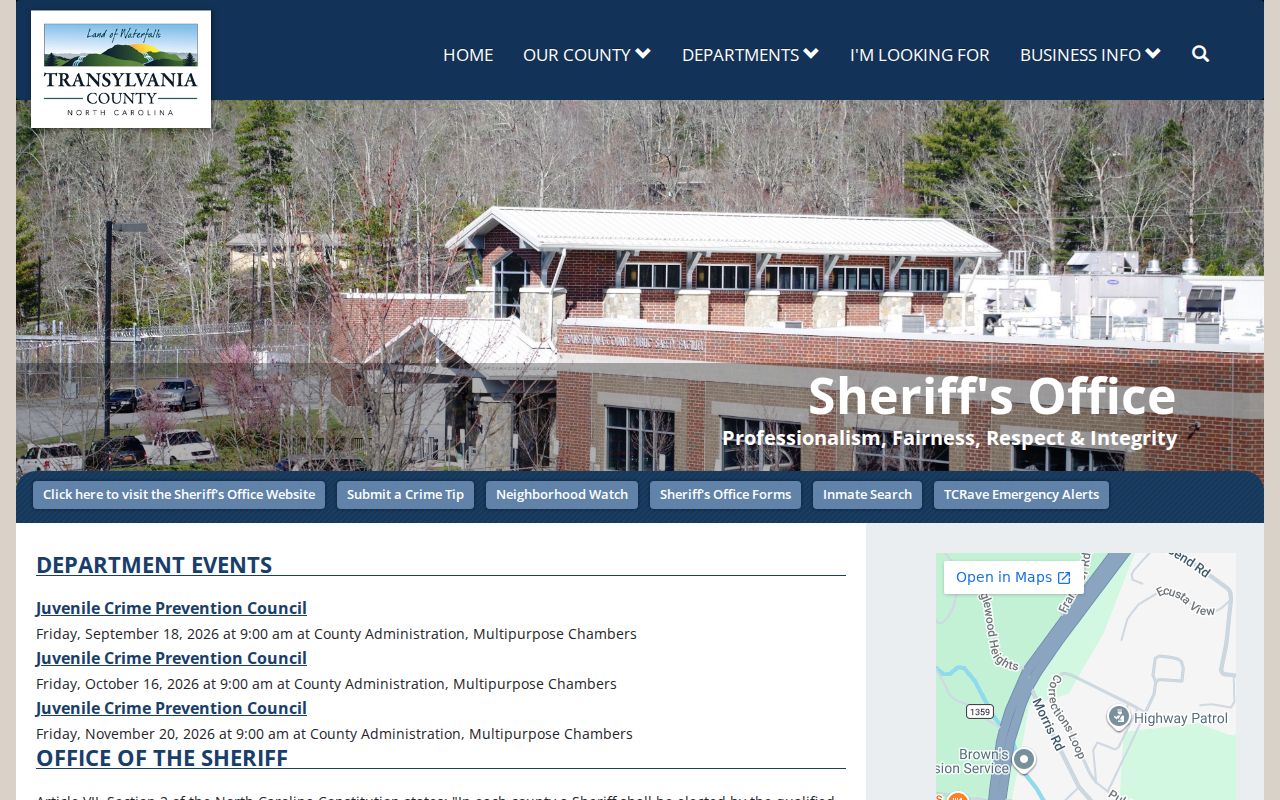
The agency page provides a stable county route when an individual feed is empty or an app link changes.
Sealed, Expunged & Restricted
Expunction is North Carolina's term for a statutory court remedy that clears eligible public entries. It is not the same as a dismissal. Eligibility depends on the charge, result, offense class, age, prior record, and waiting period. A petition starts in the county where the charge or conviction occurred. The Transylvania County clerk accepts the correct statute-specific form and fee or waiver. The general petition fee is $175, while many dismissed or not-guilty petitions cost nothing unless the result followed a listed diversion or deferred process.
Some cases in which every charge was dismissed or ended not guilty on or after December 1, 2021 qualify for automatic treatment 180 to 210 days after final disposition under G.S. 15A-146, subject to exclusions. Eligible conviction petitions use different rules and longer waits. Juvenile records, unreturned warrants, investigative files, sealed matters, victim data, and probation-officer information also have separate restrictions. If an expunged entry remains, obtain the certified order, confirm all agencies were listed, allow processing time, then use the SBI Right to Review and correction channel.
Note: A missing public entry can reflect confidentiality, sealing, expunction, timing, or search format, so absence alone does not explain why it is unavailable.
Finding Transylvania County Custody Records
County jail and state prison searches cover different custody stages. A person held before trial or serving local time belongs in the sheriff's inmate feed and detention records. Once a sentenced person transfers into state custody, the North Carolina Department of Adult Correction Offender Public Information Search becomes the better source. NCDAC says its search is not a county jail roster and not a complete criminal history. It can include state prison, parole, and historical correctional information back to 1972.
Use NC SAVAN and VINELink for free custody notifications covering county inmates, state prisoners, probationers, parolees, and registrants. The service supplements direct confirmation; it does not replace the clerk's disposition or the custodial agency's current answer. For a Transylvania County record that vanishes from the recent-arrest list, check the current inmate feed, call detention, search NCDAC when transfer is plausible, and then read the related court case.
The NCDAC criminal offender search page explains the state custody layer.
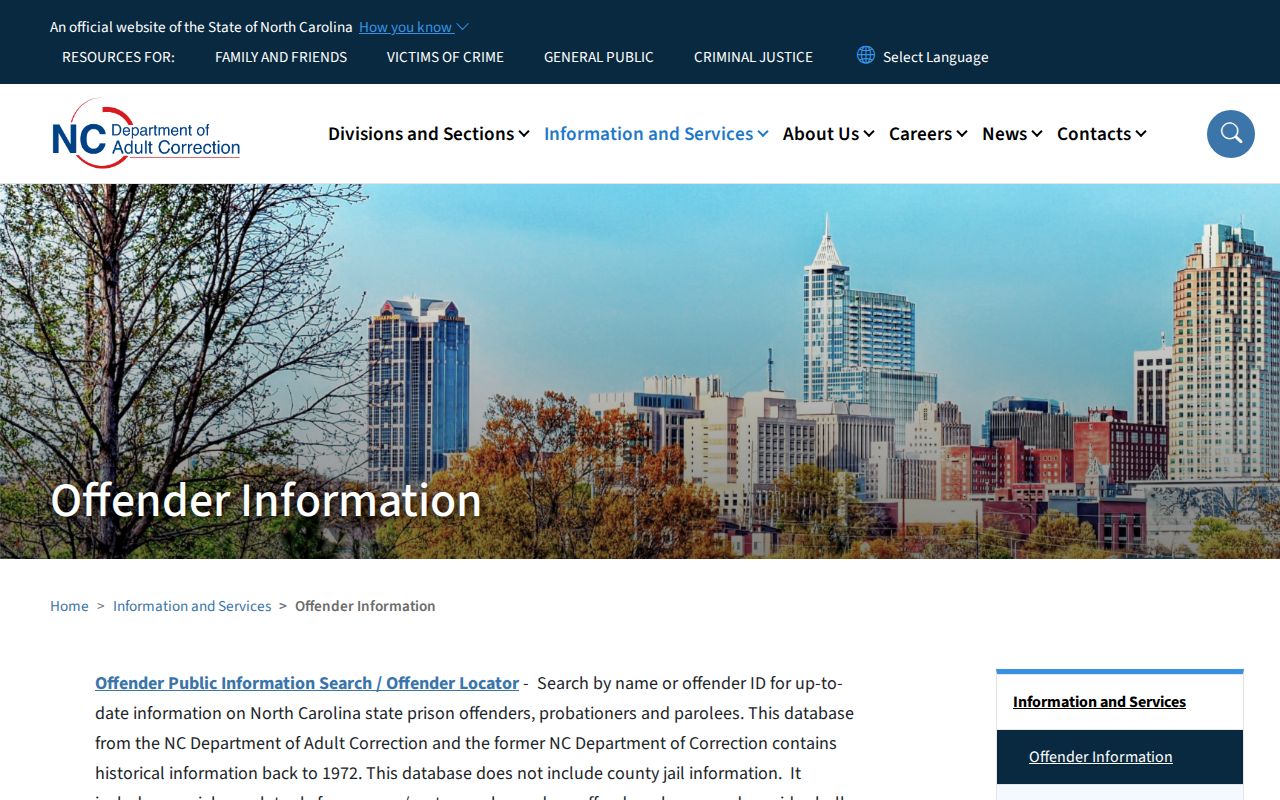
The state locator should be paired with Transylvania County detention and court sources rather than read as a stand-alone criminal record.
Reading Transylvania County Crime Records
County totals describe agency workload, not one person's history and not a city crime rate. An official April 2025 report said total reported crime declined 15 percent from 2022 through 2024 while patrol handled 1,243 reports, 13,258 calls, and 889 arrests. A March 2026 report said reportable crime fell another 5.2 percent in 2025, even as arrests rose 1.7 percent and citations increased 24 percent. Those measures can move in opposite directions because calls, reports, arrests, charges, and convictions count different events.
The same 2026 report listed 235 days of court security, 307 sessions, more than 29,000 people screened, and more than 11,000 cases. None of those figures should be used to infer Rosman or Brevard rates. They show the scale of Transylvania County justice operations and why a searcher may encounter timing differences across jail, court, sheriff, and SBI systems.
Criminal Records by City in Transylvania County
Transylvania County has only two incorporated municipalities. Brevard had 7,744 residents in the official 2020 count and has a municipal police department that keeps its own originating reports. Rosman had 701 residents and no verified municipal police, court portal, or jail. A Brevard event can begin with BPD before moving to county detention and unified state court. A Rosman request usually begins with the sheriff while the requester confirms which agency responded.
Brevard Criminal History
7,744 residents in 2020 · BPD records begin at Commerce Street, while cases and bookings move to county channels.
Rosman Criminal History
701 residents in 2020 · Sheriff, detention, and county court routes replace an unverified town police system.
Two Transylvania County Record Routes
Brevard and Rosman share the same Transylvania County courthouse and detention center, yet their first record contacts differ. Brevard Police works from 132 Commerce Street, keeps reports it creates, and uses its own OCA incident numbers. North Carolina court files use CR numbers. A BPD arrest can therefore produce a city OCA, a county booking entry, and a statewide court number for the same event.
Rosman has no verified police department, municipal criminal court, local jail, blotter, or report portal. Begin with the sheriff, but ask which agency responded before requesting the incident report. Both towns use the Clerk of Superior Court for filed District and Superior Court cases. This distinction prevents a common Transylvania County records mistake: sending every request to city hall simply because the event occurred inside a named town.