
Criminal Cases in the Transylvania County Courts
North Carolina uses one General Court of Justice, so Transylvania County does not split criminal files among city courts. District Court handles misdemeanors, infractions, first appearances, and probable-cause matters. Superior Court hears felonies and misdemeanor appeals for a new trial. Both divisions sit within District 42. Their Transylvania County criminal case records are held by the Clerk of Superior Court at the county courthouse.
A court file begins with judicial process or a charging paper, not with the jail's booking card. The clerk preserves returned warrants, criminal summonses, citations, indictments, calendars, motions, pleas, judgments, and public disposition entries. A Brevard police case and a sheriff case both move into this unified court system after charges are filed. Rosman has no separate municipal criminal court. That makes the county clerk the local court-record custodian regardless of which local officer made the arrest.
Transylvania County Criminal Court Roles
Several offices shape a Transylvania County criminal case, but they do not keep the same record. The magistrate handles initial process, probable cause for a warrantless arrest, and release conditions. The District Attorney prosecutes the state's case. A public defender or other counsel represents an eligible defendant. The clerk receives and indexes filed material. Court reporters provide the transcript channel for Superior Court proceedings.
The Transylvania County judicial directory lists the clerk at 828-885-3000, the District Attorney at 828-885-3010, magistrates at 828-884-3154, and court reporters at 828-694-4232. Call the clerk for the case file. The prosecutor and defender are not general records counters, and court staff can explain procedure without giving legal advice.
How to Search Case Records
The North Carolina eCourts Portal provides anonymous access to public statewide case data. Its Smart Search can locate Transylvania County criminal court cases by party or Enterprise Justice case number. Use a narrow search first, then add a wildcard only when spelling or number format is uncertain. Online results are near real time, but a portal summary is not a certified search.
- Open Portal and choose Smart Search or the more specific party, attorney, citation, or hearing search.
- Enter the full case number, or search the party name with the documented wildcard format.
- Set Location to Transylvania County and use Criminal Actions, status, birth date, or filing dates to narrow the list.
- Open the case and inspect events, hearings, dispositions, assignments, parties, and financial entries that appear.
- Ask the clerk for the filed document, paper record, copy, or certified search when the summary is not enough.
| Field Label | Type | Required | Notes |
|---|---|---|---|
| Smart Search criterion | Text | Yes | Defaults to case number or party name. |
| Case Number | Text | Alternative | Uses year, case letters, sequence, and county ID; partial values need four characters plus an asterisk. |
| Party Name | Text | Alternative | Use at least three last-name characters and one first-name character before wildcards. |
| Location | Dropdown | No | Select Transylvania County from the statewide list. |
| Date of Birth | Date or text | No | Available as a party-search filter. |
| Case Type, Status, Filing Dates | Dropdowns and dates | No | Choose Criminal Actions, then refine with live values. |
Transylvania County Criminal Case Search
The official Portal training resources explain Smart Search, advanced filters, hearings, and judgment search. The image below comes from that state training source.
Those tools help separate a Transylvania County criminal case from similar names elsewhere in North Carolina. A four-part Odyssey number can be especially useful. If a search returns no match, check the format, remove a filter, try the party search, and then ask the clerk whether the record is restricted, older, or filed under a different identifier.
Portal sections can include Case Summary, Case Information, Assignment Information, Party Information, Case Events, Dispositions, Hearings, and Financial Information. Empty sections do not display. Victims are excluded from public party results. Judgment Search may show the case number, status, index date, parties, and comments, but Smart Search supplies the fuller public summary.
What the Case File Shows
A Transylvania County criminal court file records the prosecution as it changes. It may show filed charges, later amendments, court settings, pleas, rulings, and the final judgment. Public content varies by case, and no reader should assume that every listed field or document will be present online. The filed clerk record is the right source when the exact charging paper, signed order, or certified outcome matters.
| Case Number & Court | Identifies the filing and whether District or Superior Court handles it. |
|---|---|
| Charging Document | Shows the allegation formally placed before the court, subject to later change. |
| Docket Entries | Track public filings, settings, motions, and actions in date order. |
| Hearing Dates | List scheduled or completed settings when public and entered. |
| Disposition & Judgment | State whether a count was dismissed, resolved by plea, tried, or otherwise concluded. |
| Sentence & Conditions | Record the court's judgment and public terms when a conviction occurs. |
The Judicial Branch provides a criminal record search form for a certified county search. Its official page is pictured below.
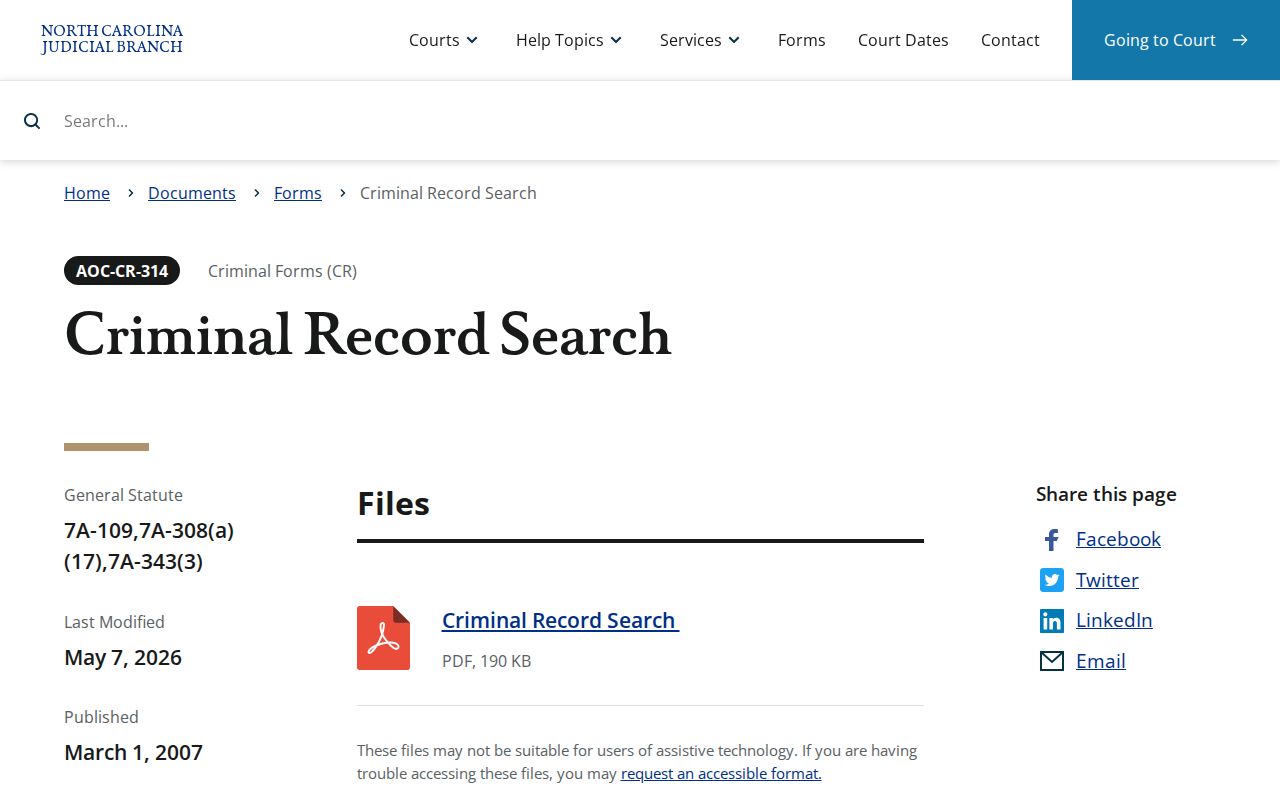
The form route produces a clerk search of Transylvania County court records. It does not create an SBI fingerprint history or replace review of a particular case file.
Transylvania County Criminal Case Terminal
Anyone may use a public self-service terminal at a North Carolina courthouse to search county or statewide criminal court data without charge. Searches can use a defendant name, case number, or victim or witness name. At the Transylvania County courthouse, the clerk can then locate the local electronic or paper file. The terminal result is noncertified, while paper copies and certified products may carry fees.
The official court-record access instructions describe terminals, clerk files, and copies. The state access page appears below.
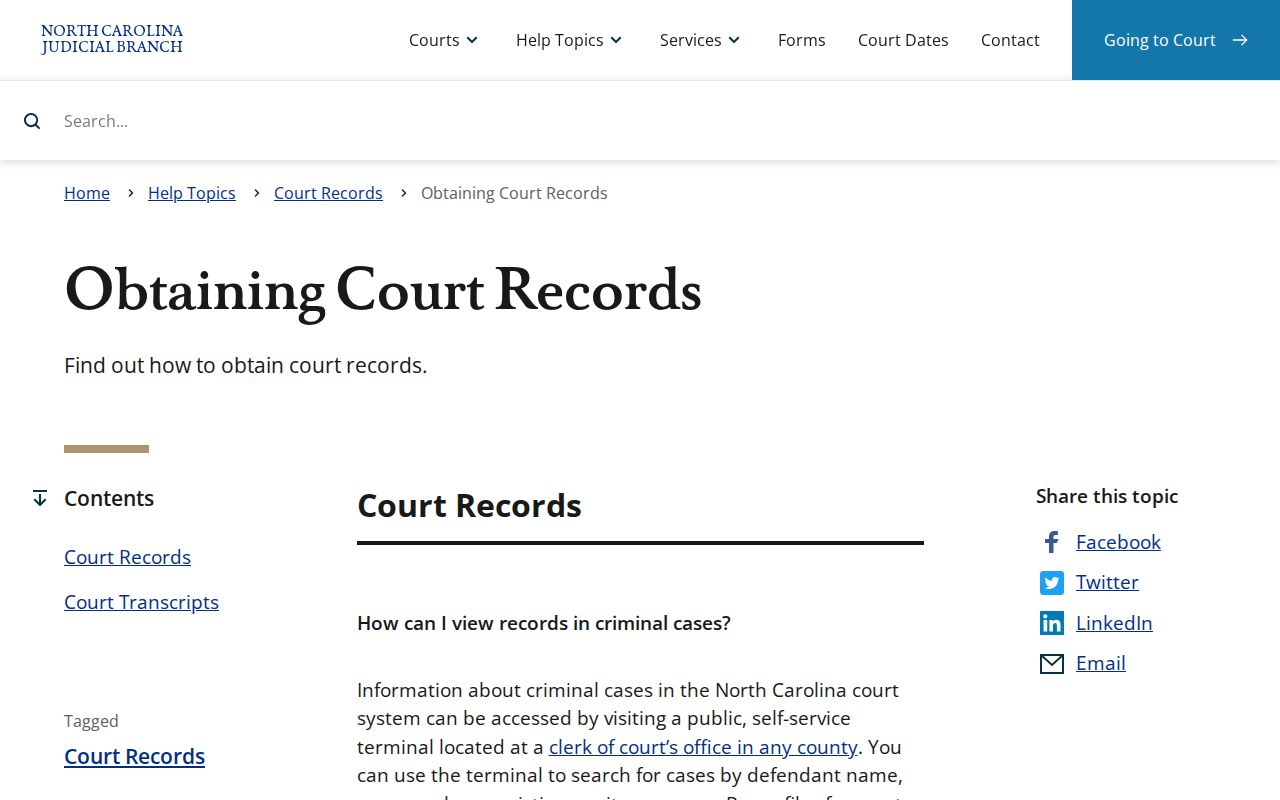
This fallback matters when Portal does not display a document. A person may inspect the paper file in the county where it was filed and ask the clerk about the available copy format.
A certified single-county search uses form AOC-CR-314 and costs $25. At the counter, accepted methods are credit card, cash, money order, or certified check. A mailed request takes a money order or certified check, not a personal check. The product searches Transylvania County court records only.
Stages of a Criminal Case
A filed charge moves through judicial steps that can change what a search result means. Arraignment states the accusation and plea. Pretrial events may address release, discovery, motions, or scheduling. A plea or trial resolves the charge unless the case is dismissed first. Disposition states the outcome, and sentencing follows a conviction. Appeals or later motions may add more entries.
Case flow: Charges Filed › Arraignment › Pretrial › Plea or Trial › Disposition › Sentencing
The booking charge can differ from the filed charge. Prosecutors may amend counts, a grand jury may return an indictment, or a court may dismiss a count. For that reason, follow the Transylvania County criminal case through its disposition instead of treating the first arrest label as the final result.
Reading Transylvania County Criminal Case Entries
Three terms keep a Transylvania County criminal case search grounded. A charge is an accusation. A disposition is the court's outcome for that count. A judgment states the result and sentence when there is a conviction. “Dismissed” and “not guilty” are nonconvictions. A guilty plea or adjudication is a conviction, followed by the court's judgment.
- Arraignment
- The stage at which the charge is stated and a plea is addressed.
- Disposition
- The recorded outcome of a charge, such as dismissal, plea, or verdict.
- Trial de novo
- A new Superior Court trial of a qualifying misdemeanor appealed from District Court.
- Expunction
- A statutory court process that removes qualifying public entries; it is not the same as dismissal.
The official certified criminal search guide distinguishes the clerk product from informal public searching. Its access page is shown below.
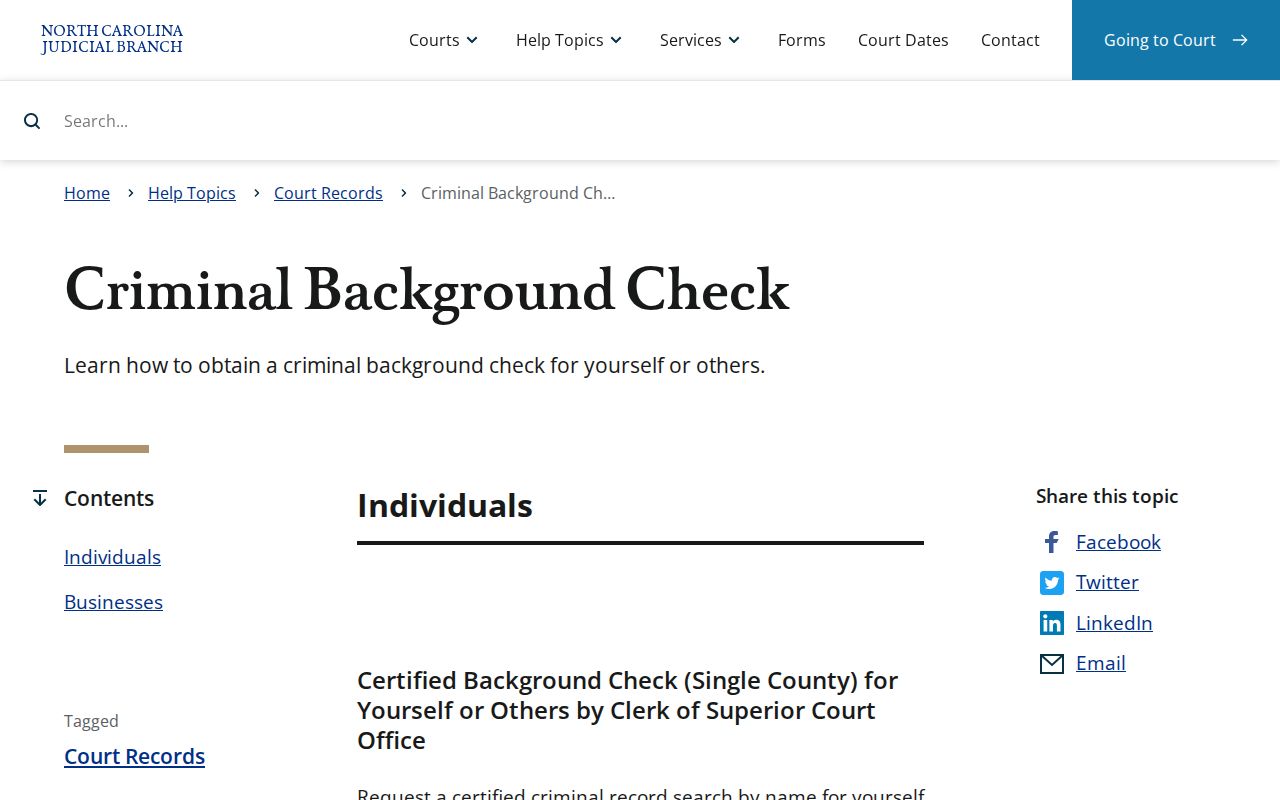
Use the certified route when proof of the county search itself is needed. Use the individual case file when the filed documents and procedural history matter.
Access & Restrictions
North Carolina law allows public inspection of court records under G.S. 7A-109, subject to records made confidential or sealed by law. Juvenile records, sealed and expunged cases, protected victim information, unreturned warrants, and confidential personal data do not become public merely because Portal exists. A blank result may reflect a search error, a restricted record, or a filing that must be checked with the clerk.
Agency investigative files follow different rules. G.S. 132-1.4 makes specified basic law-enforcement information public but does not turn the whole investigative file into a court record. Ask the sheriff or police department for its report and the clerk for filed court papers. These channels concern the same event but preserve different facts.
Transylvania County Criminal Case Access
The Transylvania County Courthouse is at 7 East Main Street, Brevard, NC 28712. Public hours are Monday through Friday, 8:30 a.m. to 5:00 p.m. The site lists a rear parking lot, more public parking across the street, wheelchair access, and elevators. Call 828-885-3000 before travel when a file may be old or restricted.
A 2026 court-facilities order says the clerk and staff remain in the historic building with the records they must maintain. It also documents long-running storage, space, access, and security concerns. The former jail addition now houses work areas for the District Attorney and Public Defender. That local history helps explain why the online system and the physical clerk counter still work together.
The NCAOC public-record procedures apply to administrative records, while the county clerk remains custodian of filed court cases. The official procedures page is pictured below.
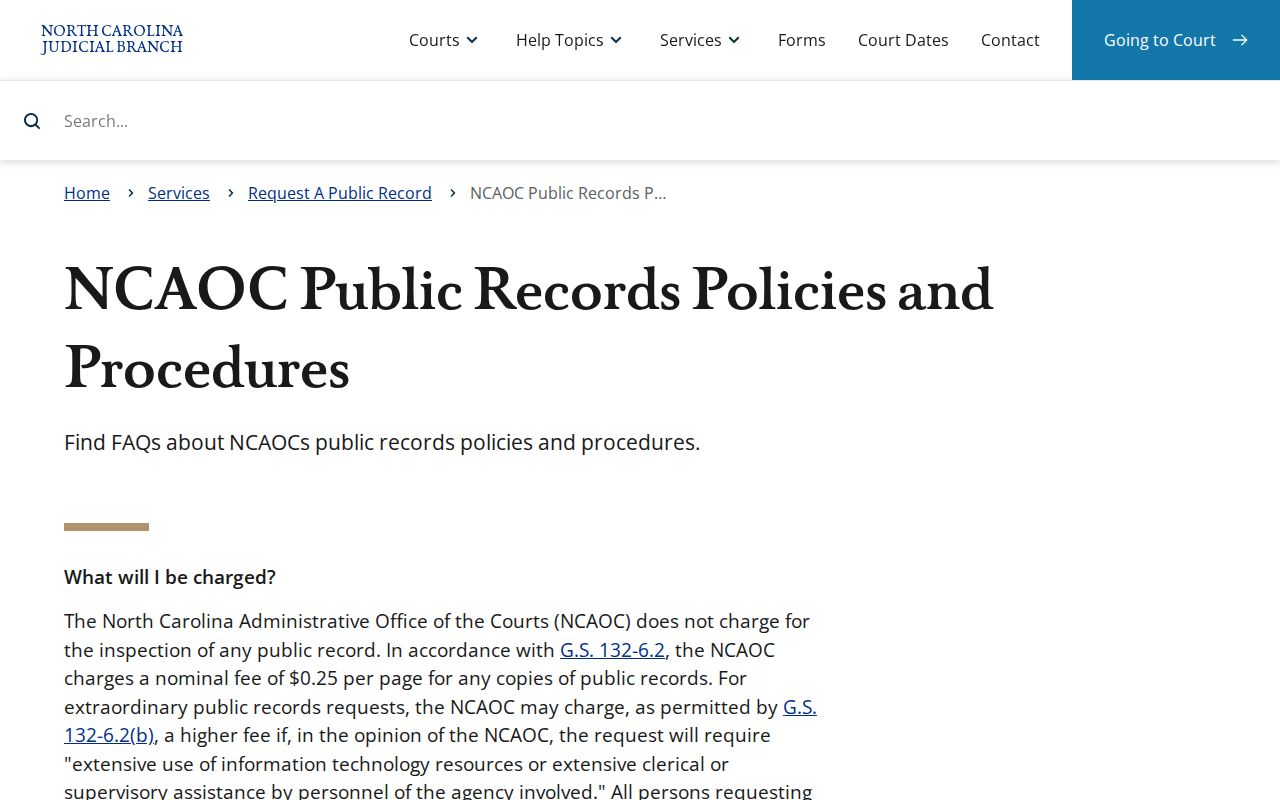
Send a case-file request to the clerk, not the statewide administrative office. State policy lists no inspection fee and a per-page administrative copy rate, but clerk-specific case-copy and archive fees should be confirmed rather than assumed.
Note: Portal offers a public case summary, while the clerk supplies the authoritative filed record and certified Transylvania County search.